

Engage–Disengage: Teaching Your Dog to Notice Triggers Calmly and Then Look Back at You
The Engage–Disengage Method is a powerful training approach for dogs who bark at specific triggers—other dogs, people, cars, bikes, doorways, or movement outside. Unlike traditional “distract your dog” tactics, this method teaches your dog to self-regulate. They learn to calmly notice a trigger (engage), then voluntarily look away from it (disengage).
Instead of barking, lunging, or freezing, your dog begins to respond with curiosity and calmness. Over time, the trigger loses its emotional intensity, and barking naturally decreases.
This method is widely used by behaviorists because it rebuilds your dog’s confidence while giving them a clear, structured way to cope with real-life triggers.
What Is the Engage–Disengage Method?
The method works in two simple phases:
1. Engage
Your dog notices the trigger (another dog, a person walking by, a delivery truck, etc.) without reacting.
2. Disengage
Your dog then chooses to look away from the trigger and back at you.
This creates a cycle of:
Trigger → Notice calmly → Look at you → Treat → Feel safe
Dogs learn that the world is safe and predictable — and that calm behavior pays better than barking.
Why Engage–Disengage Works to Reduce Barking
Many dogs bark because they feel:
- Overstimulated
- Overexcited
- Nervous
- Uncertain
- Protective
- Startled
Engage–disengage works because it:
✔ Rewards calm noticing
Instead of teaching the dog to ignore things completely, it teaches them to process information calmly.
✔ Builds impulse control naturally
The dog begins offering quiet pauses on their own.
✔ Decreases overreaction
By rewarding the disengage, the dog becomes less fixated.
✔ Uses small increments
This keeps the dog under threshold, which prevents meltdowns.
✔ Creates emotional “distance”
Your dog learns: “I can see it… and I’m okay.”
For dogs who bark at life happening around them, this method is transformative.
How to Teach the Engage–Disengage Method Step by Step
This method works best in predictable environments like:
- Quiet parks
- Open spaces
- Sidewalks with good visibility
- Parking lots with dogs at a distance
- Homes where you can control visibility
Step 1: Start at a Distance (Under Threshold)
You want your dog far enough from the trigger that they can notice it but not react.
Examples:
- If your dog normally reacts at 20 ft, start at 60–80 ft.
- If the window triggers barking, begin with the blinds partially closed.
- If your dog reacts to people, start with a helper at a distance.
The key is always: calm noticing.
Step 2: Mark the “Engage” Moment
When your dog looks at the trigger calmly, say:
“Yes!”
or click.
Then immediately reward.
This teaches:
Seeing the thing = treat
This lowers the emotional charge around the trigger.
Step 3: Wait for the Dog to Look Away (Disengage)
This usually happens naturally:
- The dog glances back at you
- The dog breaks eye contact with the trigger
- The dog checks in or shifts their body toward you
Mark immediately:
“Yes!”
→ treat again.
This teaches:
Looking away from the thing = treat
Now you have both phases working.
Step 4: Repeat Until the Dog Offers Disengagement Quickly
Over repetitions, your dog will:
- Look at the trigger
- Immediately look back at you
- Look at the trigger
- Look back at you
This “ping-pong” gaze is exactly what you want.
This pattern replaces the barking cycle with a more regulated response.
Step 5: Decrease Distance Gradually
Do NOT move closer until:
- The dog is calm
- They disengage quickly
- They take treats easily
- They have soft body language
When ready, move 2–5 feet closer.
Slow is fast here.
Step 6: Practice Around New Triggers Over Time
Once your dog understands the method:
Try it with:
- Other dogs at parks
- People walking by
- Cars or bikes
- Delivery vehicles
- Wildlife
- Indoor noises
The more contexts you practice in, the more reliable your dog becomes.
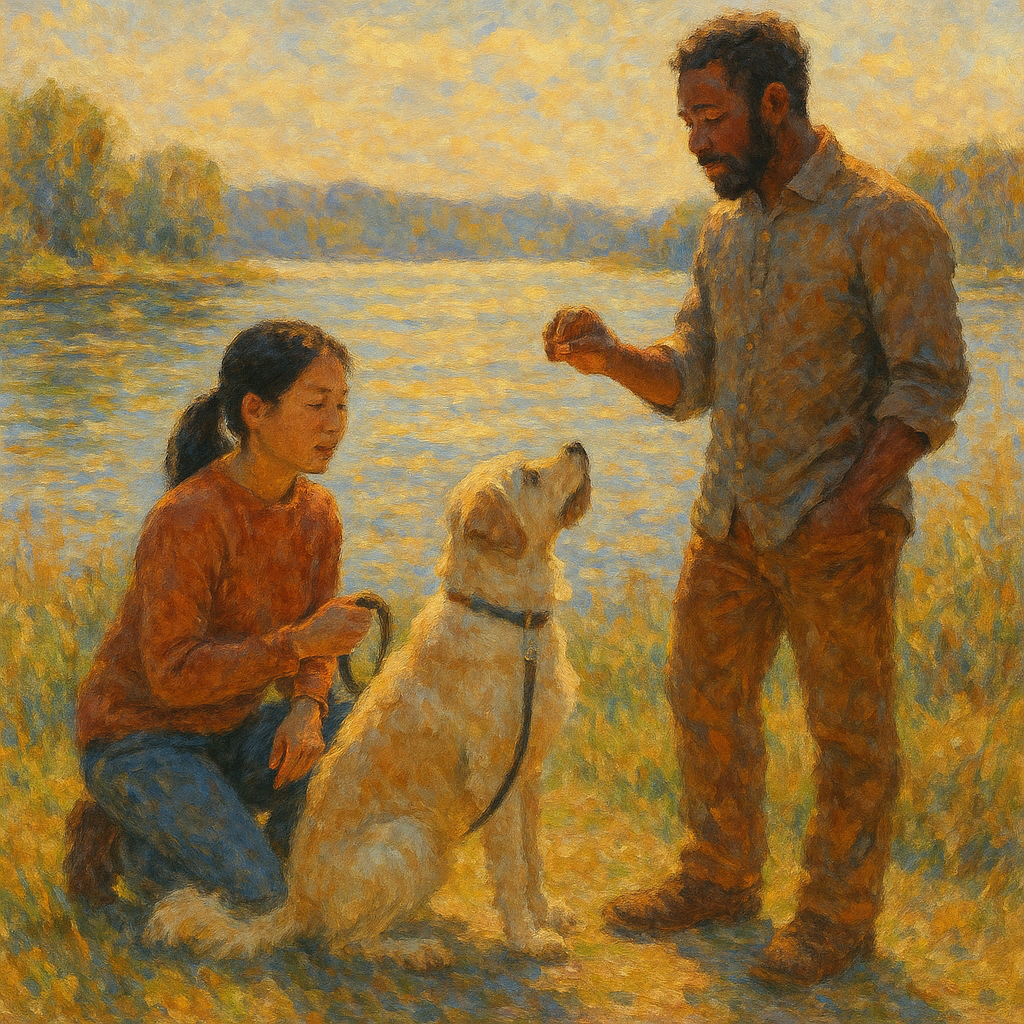
What Engage–Disengage Looks Like in Real Life
Example: Barking at Other Dogs on Walks
- See dog far away
- Your dog looks → “Yes!” → treat
- Your dog looks back at you → “Yes!” → treat
- Repeat until dog is calm and rhythmic
- Slowly move closer over several sessions
- Dog eventually sees other dog → looks at you immediately
Example: Barking at People Past the Window
- Person appears in distance
- Your dog glances → mark/reward
- Dog disengages → mark/reward
- Gradually open the blinds more
- Trigger becomes boring and manageable
Tips for Faster Progress
- Use very high-value treats
- Keep sessions short (3–5 minutes)
- Practice at times of day with predictable triggers
- Move slowly and avoid rushing
- Keep your own demeanor calm and neutral
- Train before your dog becomes overstimulated (not after)
- Always stop before your dog gets overwhelmed
Common Mistakes to Avoid
❌ Starting too close to the trigger
This causes barking and shuts down learning.
❌ Marking too late
Timing is crucial.
❌ Using the method only when the dog is already over threshold
This becomes a treadmill of frustration.
❌ Using low-value food
Triggers must be “worth it.”
❌ Not practicing the engage phase
Both phases matter equally.
When Engage–Disengage Works Best
This method is especially effective for dogs who bark at:
- Other dogs
- Strangers
- Cars and bikes
- Joggers
- Delivery workers
- Wildlife
- Noises
- Window triggers
- Moving objects
If your dog’s barking includes fear or anxiety, pair this method with:
- DS/CC
- Positive reinforcement
- Environmental management
For severe fear or aggression cases, a certified trainer or veterinary behaviorist can help tailor the plan.
A Sample 7-Day Engage–Disengage Plan
Day 1–2:
Practice at a far distance.
Reward both engage and disengage.
Day 3–4:
Close gap slightly.
Increase repetitions.
Day 5:
Practice at a new location.
Day 6:
Introduce a new trigger type.
Day 7:
Rest day.
Consistency beats intensity in this method.
TL;DR: Engage–Disengage in One Minute
- Let your dog notice a trigger from a safe distance (engage).
- Mark (“Yes!”) the calm noticing and reward.
- Wait for your dog to look back at you (disengage).
- Mark and reward the disengage.
- Repeat until your dog offers disengagement quickly and calmly.
- Gradually move closer over several sessions.
This method reduces barking by changing your dog’s emotional response to triggers and teaching them to self-regulate.
Frequently Asked Questions
How long does it take for Engage–Disengage to work?
Most dogs start showing improvement within the first few sessions, but reliable results typically take days or weeks of consistent practice. Progress depends on trigger intensity, distance, and your dog’s emotional history.
What if my dog won’t look away from the trigger?
This means you’re too close. Increase distance until your dog can notice the trigger calmly. Disengagement must happen naturally—don’t lure your dog away at first.
Can I use Engage–Disengage for multiple triggers?
Yes. Once your dog understands the pattern, you can apply it to dogs, people, noises, vehicles, and other moving objects. Start with the easiest trigger and progress slowly.
Should I add the “Quiet” cue during this method?
Not at first. Engage–disengage builds self-regulation. Once your dog consistently disengages, you can optionally add the cue during calmer sessions.
Is this method safe for reactive or fearful dogs?
Yes, as long as you work under threshold. For dogs with severe fear, panic, or aggression, pairing this method with professional guidance may be helpful.
Learn More Training Methods
The Engage–Disengage Method works best alongside other humane, science-based techniques. Explore more:
- Positive Reinforcement Training
- Desensitization & Counterconditioning
- The Quiet Cue Method
- Redirection Training
- Environmental Management
- Outdated or Harmful Methods to Avoid
You can also browse the complete library of downloadable PDF guides:
Looking for source material and scientific references?
Engage–disengage helps dogs develop calm, confident responses to the world around them. With slow, steady practice, most dogs learn to notice triggers without barking—and instead look to you for guidance.