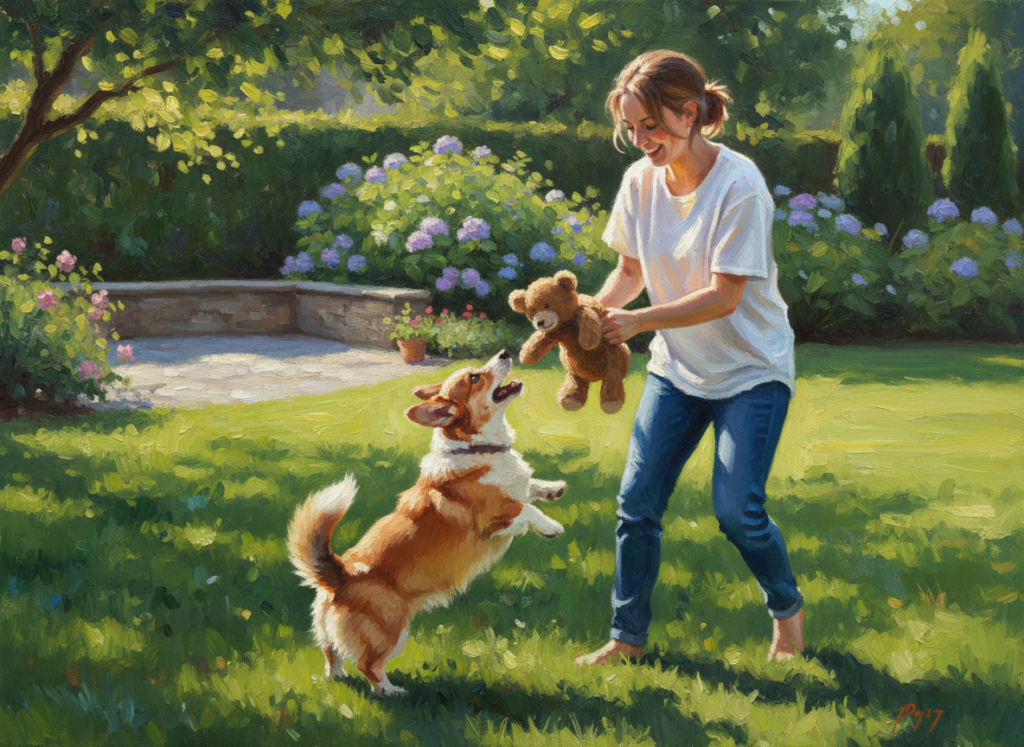

Calmness & Settling Aids: Helping Your Dog Relax and Reduce Barking Through Comfort & Soothing Support
Some dogs bark because they’re stressed, anxious, overstimulated, or simply unable to calm themselves down.
Calmness & Settling Aids help your dog relax, self-soothe, and shift out of high arousal, making barking far less likely.
These tools don’t sedate or suppress behavior — instead, they support emotional regulation, comfort, and a sense of safety.
When paired with positive training, they can transform the baseline behavior of an anxious or reactive dog.
⭐ What Calmness & Settling Aids Are
These are products designed to:
- Promote relaxation
- Reduce reactivity
- Encourage natural self-soothing
- Create comforting, calm environments
- Support better sleep and rest
- Build confidence and emotional stability
Calm behavior is easier to reinforce when the environment supports it.
⭐ Why Calmness Aids Reduce Barking
✔ They lower overall anxiety
A calmer baseline makes dogs less reactive to triggers.
✔ They reduce stress-related barking
Especially useful for dogs who bark during transitions, overstimulation, or anxiety.
✔ They promote self-regulation
Dogs learn to settle more easily on their own.
✔ They help break hyperarousal cycles
Great for dogs who get wound up quickly and stay that way.
✔ They complement training
Relaxed dogs learn faster and respond better to reinforcement.
⭐ When Calmness Aids Are Most Useful
These tools help when your dog:
- Barks when overstimulated
- Barks due to fear or anxiety
- Struggles to settle during the day
- Reacts strongly to guests, noises, or motion
- Is recovering from surgery or crate rest
- Experiences the “evening zoomies”
- Has difficulty resting after exercise
- Lives in a busy or noisy household
- Has underlying stress making barking worse
Especially effective for Fear-Based Barking, Alarm/Startle Barking, and Attention-Seeking Barking.
⭐ Types of Calmness & Settling Aids
Below are the most effective categories, with examples and guidance for choosing the right fit.
1. Lick Mats & Soothing Feeders
Licking is a natural calming behavior that reduces stress.
Best for:
- Building pre-training calm
- Settling before bedtime
- Distracting during grooming or vet care
Fill with:
Peanut butter, yogurt, pumpkin, canned food, or blended treats.

2. Snuggle or Weighted-Style Comfort Items
Not heavy weights — but lightly weighted or plush comfort objects.
Examples:
Calming stuffed animals, heartbeat toys, lightly weighted blankets.
Benefits:
Mimic soothing pressure or companionship.
3. Calming Beds & Bolster Beds
Structured shapes provide security and comfort.
Best for:
- Anxious dogs
- Dogs who struggle to settle
- Creating a designated “calm station”
Types:
Donut beds, orthopedic beds, cave-style beds.
4. Chews for Relaxation
Chewing releases endorphins and naturally calms dogs.
Examples:
Bully sticks, collagen chews, yak chews, rubber chew toys.
Best for:
Reducing restlessness and providing focused calm time.
5. Pheromone Diffusers & Sprays (DAP)
Synthetic dog-appeasing pheromones promote a sense of safety.
Examples:
Adaptil diffusers, collars, or sprays.
Best for:
Apartment noise, new environments, crate training, and mild anxiety.
6. Sound Soothers & Calming Music
Use rhythmic, low-energy soundscapes to promote calm.
Best for:
Bedtime, afternoon settling, or noise-sensitive dogs.
Options:
Classical playlists, reggae, white noise, brown noise.
7. Training Mats & Settle Stations
A dedicated place for relaxing, reinforced daily.
Examples:
Place mats, elevated beds, washable pads.
Benefits:
Teaches dogs a reliable “relax here” cue.
8. Anxiety Wraps & Compression Clothing
Gentle pressure can soothe some dogs.
Examples:
ThunderShirt® or similar wraps.
Best for:
Mild storm anxiety, reactivity, and transitional stress.
9. Natural Calming Supplements (Vet-Approved)
These do not replace training but can complement it.
Example ingredients:
L-theanine, melatonin, magnesium, chamomile, valerian.
Note:
Consult your veterinarian before introducing supplements.
⭐ How to Introduce Calmness Aids Effectively
✔ Start during calm periods
Introduce new tools when your dog is already relaxed.
✔ Pair them with positive reinforcement
Reward spontaneous calm behavior.
✔ Create a “Calm Routine”
Example: potty → light exercise → lick mat → calm music → rest.
✔ Use tools preemptively
Before high-stimulation times (delivery hours, guest arrivals, evening zoomies).
✔ Don’t depend on tools alone
They support emotional regulation — training still matters.
⭐ Common Mistakes to Avoid
❌ Using calming aids only in emergencies
(Proactive use builds better habits.)
❌ Overusing high-calorie chews or lick mats
(Moderation is key.)
❌ Ignoring the environment
A calm area works best when paired with visual/sound tools.
❌ Using supplements without guidance
Always check with a vet.
⭐ Best Tools for Each Barking Type
Fear-Based Barking
Pheromones, calming beds, settle mats
Alarm / Startle Barking
White noise, lightly weighted blankets, anxiety wraps
Attention-Seeking Barking
Lick mats, long-lasting chews, structured calm routines
Boredom & Excess Energy Barking
Used AFTER exercise to help settle
Territorial Barking
Combine with visual barriers for best results
Separation Anxiety Barking
Supports training but cannot replace behavior plans
⭐ Pairs Well With These Training Methods
- Quiet Cue Method
- Desensitization & Counterconditioning
- Redirection Training
- Engage–Disengage Method
- Environmental Management
Calmness & Settling Aids reduce arousal, making training far more effective.
⭐ Conclusion
Calmness & Settling Aids help your dog relax, self-soothe, and stay balanced — reducing barking linked to stress, anxiety, and overstimulation.
By providing soothing tools and building calm routines, you create an environment where your dog can learn emotional regulation and feel safe.
Next up:
Management Barriers & Safety Gates — tools that guide your dog’s movement and reduce barking opportunities.
TL;DR — Calmness & Settling Aids
Calmness & Settling Aids help reduce barking by lowering your dog’s overall stress levels, supporting emotional regulation, and creating a soothing environment. These tools don’t sedate your dog — they promote relaxation through natural calming behaviors such as licking, chewing, gentle pressure, and structured resting spaces. They are especially effective for anxiety-driven, overstimulated, or reactive dogs, and work best when paired with positive reinforcement training and consistent routines.
FAQ — Calmness & Settling Aids
Does my dog really need calmness aids, or should training alone fix barking?
Calmness aids don’t replace training — they support it. Many barking issues come from stress, overstimulation, or difficulty settling, and training is far more effective when your dog’s baseline anxiety is lower. Think of these tools as creating the right internal state for learning.
Will calming tools make my dog sleepy or change their personality?
No. These aids promote relaxation, not sedation. They help dogs shift from high arousal into calm behavior but won’t “knock them out” or dull their personality. Your dog should still be alert, interactive, and themselves — just less stressed.
Which dogs benefit most from calmness aids?
They are especially helpful for dogs who:
- Bark due to anxiety or fear
- Get overstimulated by noises or guests
- Struggle to settle during the day
- Have difficulty calming down after exercise
- Live in busy or noisy homes
- Experience “evening zoomies”
- Are recovering from surgery or on crate rest
They’re also excellent for puppies learning self-regulation.
Can calmness aids stop separation anxiety barking?
They can support separation-anxiety training, but they cannot fix separation anxiety on their own. Tools like pheromones or lick mats may reduce stress slightly — but structured training is still required.
Are natural calming supplements safe?
Some are safe when used properly, but always talk to your veterinarian first. Ingredients like L-theanine, chamomile, or melatonin may help mild anxiety, but professional guidance is essential — especially for dogs on medication.
How often should I use calmness aids?
Proactively, not just during stressful events. Calm routines work best when practiced daily:
- Light exercise
- Lick mat or chew
- Calming music
- Settle mat or calming bed
Consistency builds the habit of relaxing.
Is there a “best” calmness tool?
It depends on your dog. Many dogs respond well to:
- Lick mats
- Calming beds
- Long-lasting chews
- Sound soothers
- Pheromone diffusers
For highly anxious dogs, combining multiple tools works best (e.g., pheromones + calming bed + structured settle routine).
Visit the Dog Training Library →
Explore More Tools & Products