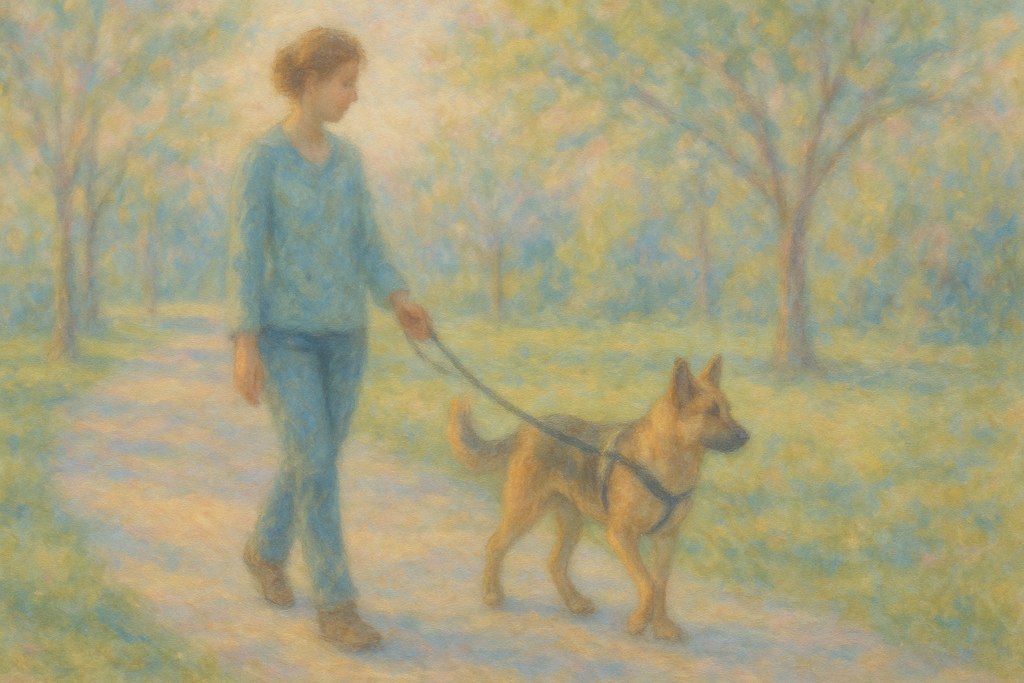

Safe Walking & Trigger Management Gear: Staying Calm & In Control on Every Walk
Walks are one of the most common places where barking happens — whether it’s directed at other dogs, people, bikes, cars, squirrels, or simply the excitement of the environment.
Safe Walking & Trigger Management Gear helps you stay confident, secure, and in control, while giving your dog the structure they need to stay calm and focused.
The right gear makes training easier, reduces pulling and reactivity, and lowers the likelihood of barking episodes.
⭐ Why Trigger Management Matters on Walks
✔ Walks are full of unpredictable triggers
Dogs, people, joggers, skateboards, wildlife, cars, noises, smells.
✔ Movement triggers instinct
Fast-moving objects can activate chasing, herding, guarding, or startle responses.
✔ Dogs rehearse reactions if not managed
A single “successful” bark or lunge reinforces future behavior.
✔ Safety comes first
Proper gear prevents escapes or dangerous incidents.
✔ Calm walks lead to calm dogs
A good walk sets the emotional tone for the whole day.
⭐ When to Use Safe Walking Gear
This gear helps when your dog:
- Barks at other dogs on walks
- Barks at people, kids, or bikes
- Lunges or pulls toward triggers
- Gets overstimulated in busy environments
- Startles easily
- Has a history of slipping collars
- Needs more structure to stay calm
- Lives in a city or high-trigger area
Particularly effective for Reactivity, Alarm/Startle Barking, Territorial Behavior on Leash, and Fear-Based Barking.
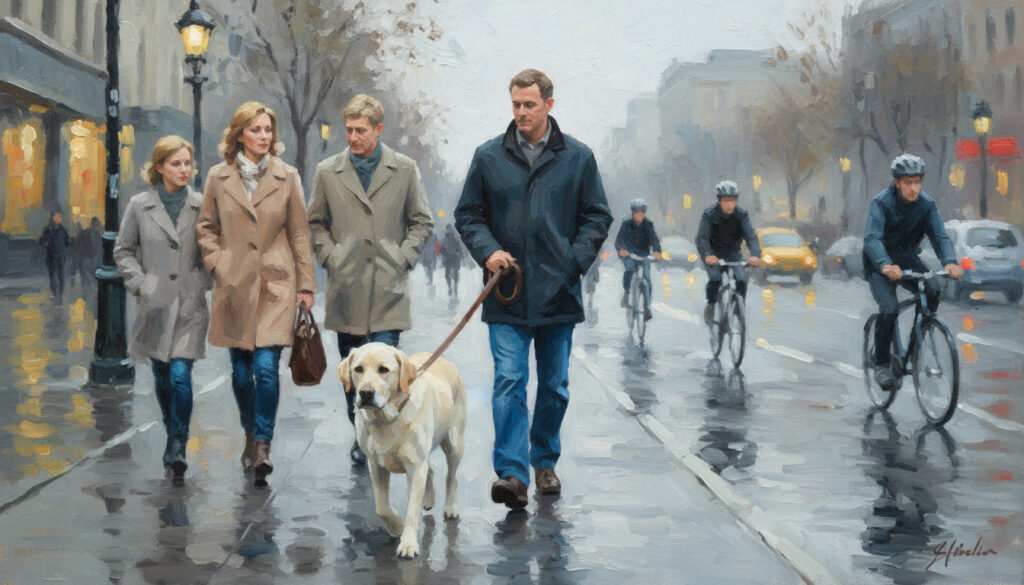
⭐ Types of Safe Walking & Trigger Management Gear
Below are the most reliable tools to make walks calmer, safer, and more predictable.
1. No-Pull or Front-Clip Harnesses
Designed to give you better control without causing pain.
Best for:
- Dogs who pull or lunge
- Reactivity or high arousal
- Walks in busy areas
Benefits:
Reduces leverage, improves turning ability, and supports positive training.
2. Head Halters (Gentle Leader, Halti)
Provides powerful control for strong or impulsive dogs.
Best for:
- Large, strong dogs
- Dogs with big “forward drive”
- Owners needing more control
Note:
Introduce slowly with positive reinforcement — many dogs adjust easily with proper conditioning.
3. Long Lines for Controlled Environment Walks
Provides freedom while keeping you connected and safe.
Best for:
- Sniff walks
- Training recall
- Open, low-trigger spaces
Benefits:
Promotes relaxation and reduces excitement-based barking.
4. Double-Clip Leashes & Two-Point Control
Attach to both the harness chest ring and back ring.
Best for:
- Dogs who lunge
- Dogs who zig-zag or get overstimulated
Benefits:
Increases stability and reduces sudden pulling.
5. Treat Pouches & Rewards Carriers
Critical for training on the move.
Best for:
- Redirection
- Engage–Disengage Method
- Look-at-that training
- Rewarding calm behavior
Benefits:
Immediate rewards = faster learning.
6. Calming Walking Tools (Lavender Clips, Pheromone Collars)
Helps maintain a lower arousal threshold.
Best for:
- Nervous walkers
- Dogs with noise sensitivity
- Reactive dogs needing extra support
Benefits:
Complements training, not a standalone fix.
7. Visibility & Safety Gear
Prevents surprise triggers and keeps walks predictable.
Examples:
Reflective harnesses, LED collars, bright leash colors.
Benefits:
Other walkers can see you and give space.
8. Sturdy Standard Leashes (4–6 ft)
Still the gold standard for everyday controlled walking.
Best for:
Urban environments, close quarters, reactive dogs.
Benefits:
Predictable, safe, and easy to manage.
9. Muzzles (for Safety, Not Punishment)
If properly conditioned, muzzles create safety for everyone.
Best for:
- Dogs with bite history or fear reactivity
- Vet, groomer, or high-stress scenarios
Benefits:
Allows training to continue safely, without restricting breathing.
10. Pocket Targets & Focus Tools
Teach dogs to focus on you instead of triggers.
Examples:
Target sticks, focus sticks, fist-touch cues.
Benefits:
Redirects attention and prevents the “trigger lock-on.”
⭐ How to Use Walking Gear Effectively
✔ Introduce new gear slowly
Pair all equipment with treats, praise, and comfort.
✔ Keep distance from triggers
Distance reduces barking more than anything else.
✔ Reinforce calm moments
Reward “looking and staying calm,” not just obedience cues.
✔ Use the Engage–Disengage Method
Let your dog see the trigger → reward calm disengagement.
✔ Choose routes intentionally
Quiet streets, early morning walks, parks with room to move.
✔ Practice structured decompression walks
Slow-paced sniffing dramatically reduces barking.
⭐ Common Mistakes to Avoid
❌ Tight, tense leash handling
(Communicates stress to your dog.)
❌ Using retractable leashes with reactive dogs
(Too unpredictable and unsafe.)
❌ Pulling or yanking
(Works against calm behavior.)
❌ Letting your dog rehearse barking
(Walking toward triggers reinforces the behavior.)
❌ Skipping warm-up routines
(A few minutes of sniffing first sets the tone.)
⭐ Best Tools for Each Barking Type
Reactivity / Barking at Dogs
Front-clip harness, treat pouch, two-point control
Fear-Based Barking
Head halter (if conditioned gently), calming collar, predictable routes
Alarm / Startle Barking
Visibility gear, distance management, calming aids
Territorial Barking
Standard leash + distance; avoid tight quarters
Boredom / Excess Energy Barking
Long-line sniff walks + structured decompression
Attention-Seeking Barking
Pre-walk enrichment + focus work
⭐ Pairs Well With These Training Methods
- Engage–Disengage Method
- Positive Reinforcement Training
- Desensitization & Counterconditioning
- Redirection Training
- Environmental Management
Walking gear creates the structure your dog needs for successful training in real-world environments.
⭐ Conclusion
Safe Walking & Trigger Management Gear helps you guide your dog calmly through the outside world. With the right harness, leash setup, focus tools, and calm routines, you can prevent barking, reduce reactivity, and make walks enjoyable and stress-free for both you and your dog.
Next up:
Training Supplies for Skill-Building — tools that support your dog’s learning and reinforce positive habits.
Explore More Tools & Products
- 👀 Visual Management Tools
- 🔊 Sound Management Tools
- 🧠 Enrichment & Mental Stimulation Tools
- 🏃 Exercise Tools & Outdoor Support
- 🛏️ Calmness & Settling Aids
- 🚧 Management Barriers & Safety Gates
- 🌳 Outdoor & Yard Management Tools
- 🐕 Safe Walking & Trigger Management Gear
- 🎒 Training Supplies
- ⚠️ Tools & Methods to Avoid
Explore More Resources