Management Barriers & Safety Gates: Guiding Your Dog’s Movement to Reduce Barking
Sometimes the simplest way to reduce barking is to prevent your dog from reaching the places where barking is most likely to happen.
Management Barriers & Safety Gates create structure and clear boundaries, helping your dog stay in calmer spaces and avoid overstimulating windows, doors, or hallways.
These tools don’t punish or restrict freedom — instead, they redirect your dog into success by limiting access to high-trigger areas.
They are especially useful in multi-dog homes, busy households, apartments, and for dogs who struggle with impulse control.
⭐ What Management Barriers & Safety Gates Are
They include any physical tools that:
- Block access to high-trigger zones
- Prevent window or door rushing
- Create calm, quiet areas
- Support training by reducing rehearsed barking
- Provide safety and structure
These tools are part of the Environmental Management family and are essential for setting dogs up for success.
⭐ Why Barriers Reduce Barking
✔ They prevent rehearsed behavior
If your dog can’t run to the window or door, they can’t practice barking at passersby.
✔ They reduce arousal
Being farther away from triggers helps dogs stay calmer.
✔ They support training
Boundaries give you time to reinforce quiet behavior.
✔ They prevent chain reactions
Dogs often bark because they hear or see another dog bark first.
✔ They add safety
Prevent door-dashing, fence-fighting, or overwhelm during busy times.
⭐ When to Use Barriers & Gates
These tools are especially helpful when your dog:
- Barks at the front window
- Rushes the door when guests arrive
- Barks in high-traffic areas
- Gets overstimulated by kids or other pets
- Needs help settling in a quiet space
- Resource guards or needs calm separation
- Is easily triggered by hallway, stairwell, or street noise
- Barks at neighbors or dogs across the fence
Ideal for Territorial Barking, Alarm/Startle Barking, and Attention-Seeking Barking.
⭐ Types of Management Barriers & Safety Gates
Below are the most effective options and how to use each one safely.
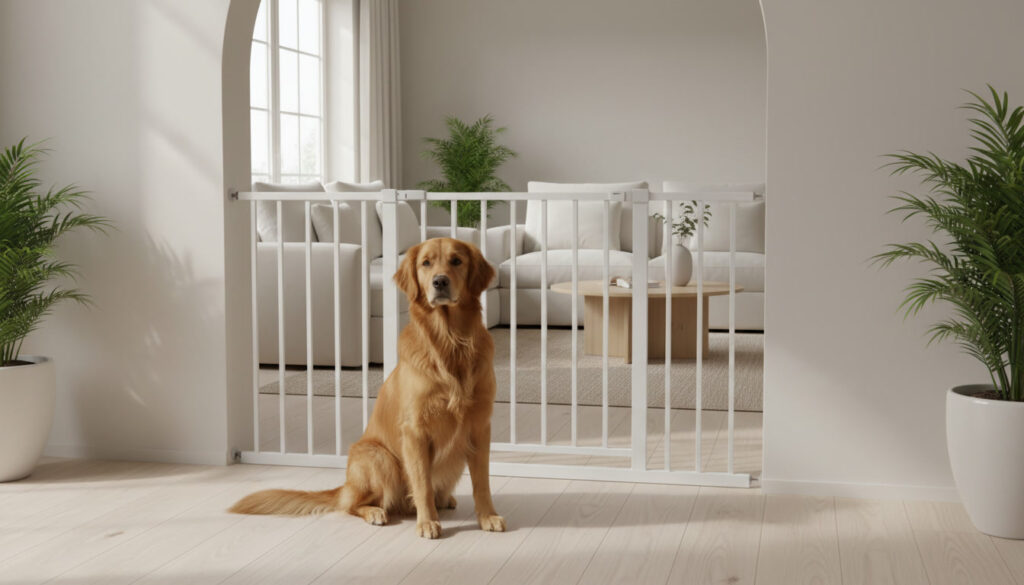
1. Baby Gates (Walk-Through or Pressure-Mounted)
The most common and versatile barrier option.
Best for:
- Blocking hallways or living rooms
- Separating dogs during training
- Keeping dogs away from overstimulating windows
Tips:
Choose tall, sturdy gates for jumpers.
2. Freestanding Indoor Barriers
Moveable panels or folding gates.
Best for:
- Quick room dividers
- Temporary separation
- Renters who can’t install fixtures
Benefits:
Flexible, easy to reposition.
3. Tall Pet Gates for Athletic Dogs
Some dogs hop over standard gates easily.
Best for:
Huskies, Border Collies, German Shepherds, jumpers, climbers.
Tips:
Look for 36–41 inch options.
4. Doorway Barriers (Mesh or Fabric)
Lightweight and minimalist.
Best for:
Bedrooms, offices, or stair areas where airflow matters.
Benefits:
Dogs can see you, which reduces frustration.
5. Playpens & Exercise Pens
Create contained calm spaces.
Best for:
- Puppies
- Multi-dog households
- Dogs who need a rest break
Tips:
Attach to furniture or walls for stability.
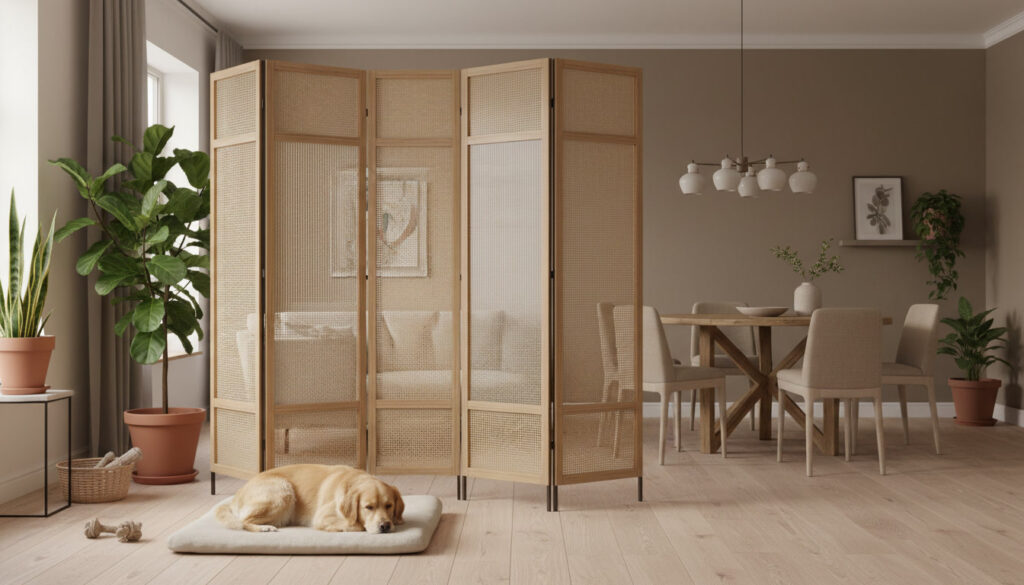
6. Room Separation Panels
Stylish, high-coverage screens.
Best for:
Living rooms or entryways where aesthetics matter.
Benefits:
Provide visual blocks AND physical separation.
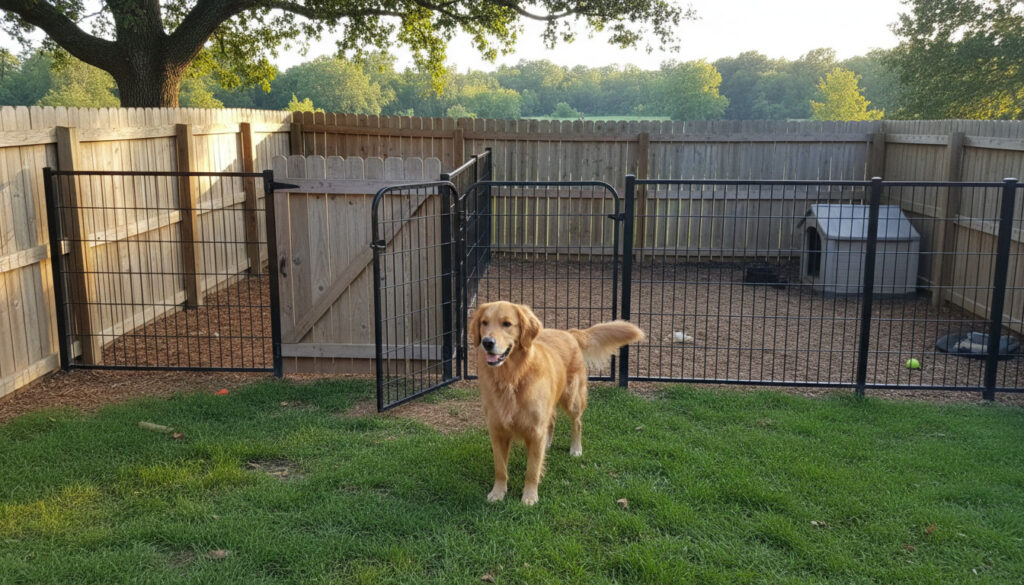
7. Outdoor Fencing & Airlocks
The outdoor version of gates.
Examples:
Double-gate “airlock” entries, secure fencing, temporary fencing panels.
Best for:
- Escape-prone dogs
- Yard management
- Reducing fence-fighting barking
8. Door Barriers for Guests & Deliveries
Prevent front-door chaos and barking episodes.
Examples:
Baby gate across the foyer, hallway barriers, or closed-off entryways.
Best for:
Dogs who bark at doorbells or jump on visitors.
⭐ How to Use Barriers Effectively
✔ Use them proactively
Put the barrier in place before triggers happen.
✔ Pair barriers with training
Reward calmness behind the barrier.
✔ Create “safe zones”
Teach your dog that certain spaces mean relaxation.
✔ Make the barrier neutral or positive
Never use it as a punishment.
✔ Rotate locations if needed
Especially useful in dynamic households or apartments.
⭐ Common Mistakes to Avoid
❌ Using barriers as the only solution
(They reduce barking but don’t teach new habits.)
❌ Creating frustration by blocking visual access
Use opaque barriers if visual triggers are an issue.
❌ Relying on gates that dogs can jump
Use tall versions for high-energy dogs.
❌ Not anchoring playpens or panels
A determined dog can tip them.
⭐ Best Tools for Each Barking Type
Territorial & Protective Barking
Block access to front windows or yard gates.
Alarm / Startle Barking
Separate dog from high-noise hallways or entrances.
Fear-Based Barking
Create controlled safe spaces away from triggers.
Attention-Seeking Barking
Use gates to reduce access, then reinforce quiet behavior.
Boredom & Excess Energy Barking
Pair with enrichment, not as a standalone solution.
Separation Anxiety Barking
Use only as part of a structured training plan.
⭐ Pairs Well With These Training Methods
- Environmental Management
- Positive Reinforcement Training
- Redirection Training
- Desensitization & Counterconditioning
- Quiet Cue Method
Barriers reduce opportunities for barking, allowing training to work more consistently.
⭐ Conclusion
Management Barriers & Safety Gates give your dog clear boundaries and limit access to high-trigger areas, reducing barking opportunities and supporting calm behavior.
By guiding your dog into quieter, more relaxed spaces — and pairing this with positive training — you help your dog succeed without stress or conflict.
Up next:
Outdoor & Yard Management Tools — keeping dogs calm and safe in outdoor environments.Management Barriers & Safety Gates: Guiding Your Dog’s Movement to Reduce Barking
Sometimes the simplest way to reduce barking is to prevent your dog from reaching the places where barking is most likely to happen.
Management Barriers & Safety Gates create structure and clear boundaries, helping your dog stay in calmer spaces and avoid overstimulating windows, doors, or hallways.
These tools don’t punish or restrict freedom — instead, they redirect your dog into success by limiting access to high-trigger areas.
They are especially useful in multi-dog homes, busy households, apartments, and for dogs who struggle with impulse control.
⭐ What Management Barriers & Safety Gates Are
They include any physical tools that:
- Block access to high-trigger zones
- Prevent window or door rushing
- Create calm, quiet areas
- Support training by reducing rehearsed barking
- Provide safety and structure
These tools are part of the Environmental Management family and are essential for setting dogs up for success.
⭐ Why Barriers Reduce Barking
✔ They prevent rehearsed behavior
If your dog can’t run to the window or door, they can’t practice barking at passersby.
✔ They reduce arousal
Being farther away from triggers helps dogs stay calmer.
✔ They support training
Boundaries give you time to reinforce quiet behavior.
✔ They prevent chain reactions
Dogs often bark because they hear or see another dog bark first.
✔ They add safety
Prevent door-dashing, fence-fighting, or overwhelm during busy times.
⭐ When to Use Barriers & Gates
These tools are especially helpful when your dog:
- Barks at the front window
- Rushes the door when guests arrive
- Barks in high-traffic areas
- Gets overstimulated by kids or other pets
- Needs help settling in a quiet space
- Resource guards or needs calm separation
- Is easily triggered by hallway, stairwell, or street noise
- Barks at neighbors or dogs across the fence
Ideal for Territorial Barking, Alarm/Startle Barking, and Attention-Seeking Barking.
⭐ Types of Management Barriers & Safety Gates
Below are the most effective options and how to use each one safely.
1. Baby Gates (Walk-Through or Pressure-Mounted)
The most common and versatile barrier option.
Best for:
- Blocking hallways or living rooms
- Separating dogs during training
- Keeping dogs away from overstimulating windows
Tips:
Choose tall, sturdy gates for jumpers.
2. Freestanding Indoor Barriers
Moveable panels or folding gates.
Best for:
- Quick room dividers
- Temporary separation
- Renters who can’t install fixtures
Benefits:
Flexible, easy to reposition.
3. Tall Pet Gates for Athletic Dogs
Some dogs hop over standard gates easily.
Best for:
Huskies, Border Collies, German Shepherds, jumpers, climbers.
Tips:
Look for 36–41 inch options.
4. Doorway Barriers (Mesh or Fabric)
Lightweight and minimalist.
Best for:
Bedrooms, offices, or stair areas where airflow matters.
Benefits:
Dogs can see you, which reduces frustration.
5. Playpens & Exercise Pens
Create contained calm spaces.
Best for:
- Puppies
- Multi-dog households
- Dogs who need a rest break
Tips:
Attach to furniture or walls for stability.
6. Room Separation Panels
Stylish, high-coverage screens.
Best for:
Living rooms or entryways where aesthetics matter.
Benefits:
Provide visual blocks AND physical separation.
7. Outdoor Fencing & Airlocks
The outdoor version of gates.
Examples:
Double-gate “airlock” entries, secure fencing, temporary fencing panels.
Best for:
- Escape-prone dogs
- Yard management
- Reducing fence-fighting barking
8. Door Barriers for Guests & Deliveries
Prevent front-door chaos and barking episodes.
Examples:
Baby gate across the foyer, hallway barriers, or closed-off entryways.
Best for:
Dogs who bark at doorbells or jump on visitors.
⭐ How to Use Barriers Effectively
✔ Use them proactively
Put the barrier in place before triggers happen.
✔ Pair barriers with training
Reward calmness behind the barrier.
✔ Create “safe zones”
Teach your dog that certain spaces mean relaxation.
✔ Make the barrier neutral or positive
Never use it as a punishment.
✔ Rotate locations if needed
Especially useful in dynamic households or apartments.
⭐ Common Mistakes to Avoid
❌ Using barriers as the only solution
(They reduce barking but don’t teach new habits.)
❌ Creating frustration by blocking visual access
Use opaque barriers if visual triggers are an issue.
❌ Relying on gates that dogs can jump
Use tall versions for high-energy dogs.
❌ Not anchoring playpens or panels
A determined dog can tip them.
⭐ Best Tools for Each Barking Type
Territorial & Protective Barking
Block access to front windows or yard gates.
Alarm / Startle Barking
Separate dog from high-noise hallways or entrances.
Fear-Based Barking
Create controlled safe spaces away from triggers.
Attention-Seeking Barking
Use gates to reduce access, then reinforce quiet behavior.
Boredom & Excess Energy Barking
Pair with enrichment, not as a standalone solution.
Separation Anxiety Barking
Use only as part of a structured training plan.
⭐ Pairs Well With These Training Methods
- Environmental Management
- Positive Reinforcement Training
- Redirection Training
- Desensitization & Counterconditioning
- Quiet Cue Method
Barriers reduce opportunities for barking, allowing training to work more consistently.
⭐ Conclusion
Management Barriers & Safety Gates give your dog clear boundaries and limit access to high-trigger areas, reducing barking opportunities and supporting calm behavior.
By guiding your dog into quieter, more relaxed spaces — and pairing this with positive training — you help your dog succeed without stress or conflict.
Up next:
Outdoor & Yard Management Tools — keeping dogs calm and safe in outdoor environments.
Explore More Tools & Products
- Visual Management Tools
- Sound Management Tools
- Enrichment & Mental Stimulation Tools
- Exercise Tools & Outdoor Support
- Calmness & Settling Aids
- Management Barriers & Safety Gates
- Outdoor & Yard Management Tools
- Safe Walking & Trigger Management Gear
- Training Supplies
- Tools & Methods to Avoid
More Resources