
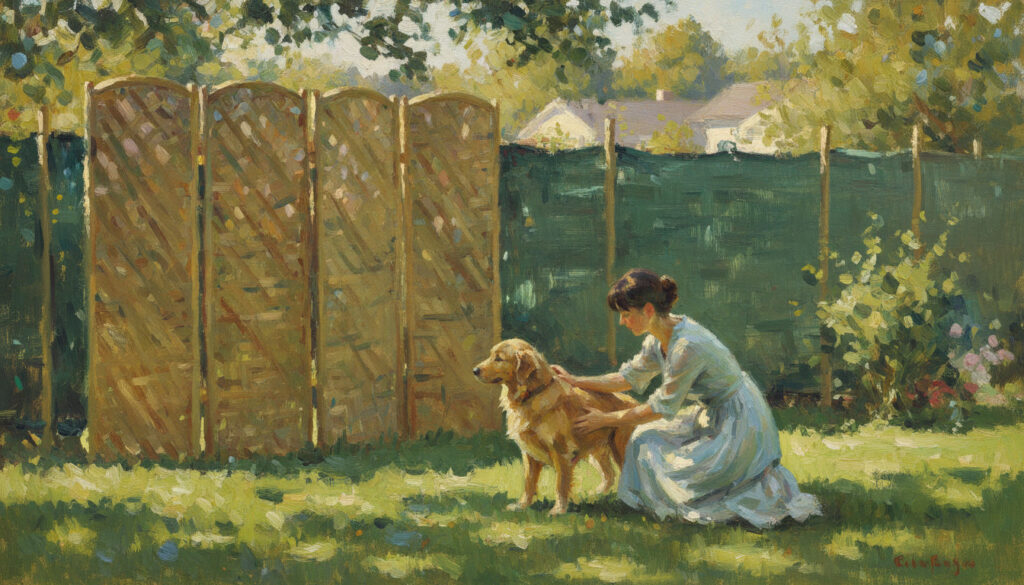
Outdoor & Yard Management Tools: Creating a Calm, Safe Space That Reduces Barking Outside
Outdoor environments present some of the strongest triggers for barking — wildlife, neighbor dogs, passing cars, foot traffic, lawn equipment, sound reflections, and boundary anxiety.
Outdoor & Yard Management Tools help you transform your dog’s outdoor environment into a calmer, safer, and more predictable space where barking is far less likely.
These tools keep your dog focused, secure, and relaxed, allowing outdoor time to be enjoyable — not reactive.
⭐ Why Outdoor Tools Matter for Barking Reduction
✔ Outdoor triggers are often intense and unpredictable
Dogs see or hear far more outside than we realize.
✔ Many dogs practice territorial behavior outdoors
“Fence fighting” becomes self-reinforcing unless managed.
✔ The backyard often becomes a self-rewarding bark-loop
(They bark → the squirrel leaves → the dog thinks barking worked.)
✔ Outdoor management prevents escape risks
Stress and arousal increase the risk of darting or chasing.
✔ Calm outdoor spaces improve behavior indoors
A calmer dog outside is a calmer dog everywhere.
⭐ When to Use Outdoor & Yard Tools
These tools are especially helpful when your dog:
- Barks at people or dogs walking past
- Fence-fights with neighbor dogs
- Barks at wildlife (squirrels, birds, deer)
- Patrols the yard or paces the fence line
- Is overstimulated by noises or movement
- Lives in a busy neighborhood
- Barks in the yard and bothers neighbors
- Needs safer outdoor boundaries
Particularly effective for Territorial Barking, Alarm/Startle Barking, and Boredom/Excess Energy Barking outdoors.
⭐ Types of Outdoor & Yard Management Tools
Below are the top outdoor tools, each chosen for safety and effectiveness.
1. Privacy Fencing & Fence Slats
Reduces visibility and prevents boundary triggers.
Best for:
- Fence-fighting
- Street-facing yards
- Dogs who scan for movement
Benefits:
Removing visual triggers usually reduces barking dramatically.
2. Visual Barrier Mesh or Bamboo Screens
Affordable, attractive options that block sightlines.
Best for:
- Chain-link or open fences
- Townhomes or small yards
- Quick installation without construction
Benefits:
Reduces barking by limiting visual access.
3. Secure Outdoor Tethering Systems (Supervised Only)
Provides mobility and safety without full freedom.
Examples:
Overhead runner lines, short-term yard tie-outs.
Best for:
Dogs who need outdoor time in unsecured yards.
Important:
Always supervised — never leave tethered dogs alone.
4. Outdoor Playpens or Containment Areas
Creates a safe outdoor “zone” within a larger yard.
Best for:
- Puppies
- Small dogs
- Controlled playtime
- Preventing access to trigger zones
Benefits:
Keeps dogs away from fences where barking happens.
5. Shade Structures, Cooling Mats & Weather Shelters
Discomfort increases irritability and barking.
Best for:
- Hot climates
- Snowy or rainy regions
- Dogs prone to stress from weather
Tools include:
Shade sails, canopy tents, cooling pads, insulated dog houses.
6. Digging Pits & Outdoor Enrichment Stations
Healthy outlets reduce frustration.
Examples:
Sandboxes, designated digging boxes, scent gardens.
Benefits:
Redirects energy away from fence patrolling or barking.
7. Outdoor Noise-Reduction Tools
Softens the sounds that trigger barking.
Tools include:
Outdoor-rated white noise machines, privacy hedges, water features.
Benefits:
Masking certain noises reduces startle reactions.
8. Outdoor Cameras (Two-Way Optional)
Allows monitoring and training opportunities.
Best for:
- Dogs who bark when alone
- Identifying invisible triggers
- Safety and peace of mind
Note:
Avoid using two-way audio for yelling — use calm cues or quiet praise.
9. Double-Gate “Airlock” Safety Systems
Prevents door dashing and escape during transitions.
Best for:
Homes with multiple dogs, kids, or busy yards.
Benefits:
Keeps your dog safe and reduces stress-related barking at gates.
10. Landscaping for Calmness
Surprisingly effective.
Examples:
Tall bushes, hedges, partitions, lattice panels.
Benefits:
Breaks sightlines and absorbs sound — a natural management system.

⭐ How to Use Outdoor Tools Effectively
✔ Identify your dog’s outdoor triggers
Is it people? Dogs? Wildlife? Sounds? Movement? All of the above?
✔ Block access to trigger-heavy areas
Most barking happens along fence lines.
✔ Supervise outdoor time for pattern-breaking
Preventing rehearsed barking helps behavior change faster.
✔ Add enrichment to the yard
A busy dog is a quieter dog.
✔ Pair management with training
Reward calmness and quiet behavior outside.
✔ Keep outdoor sessions short and meaningful
Quality > quantity.
⭐ Common Mistakes to Avoid
❌ Leaving dogs outside unsupervised for long periods
(They rehearse barking and boundary patrolling.)
❌ Using outdoor systems as punishment
(They should be safe, positive spaces.)
❌ Assuming the yard is “enough exercise”
(Yards are boring compared to walks and sniffing.)
❌ Installing see-through fences with no visual management
(Clear boundary triggers = automatic barking.)
❌ Using tethering without supervision
(Safety risks.)
⭐ Best Tools for Each Barking Type
Territorial & Protective Barking
Privacy fencing, visual screens, double-gates
Alarm / Startle Barking
Sound masking, hedges, shaded shelters
Fear-Based Barking
Quiet corners, outdoor playpens, predictable routines
Boredom & Excess Energy Barking
Dig pits, scent gardens, outdoor enrichment
Attention-Seeking Barking
Guided outdoor activities, not unsupervised access
Separation Anxiety Barking
Outdoor tools rarely help — focus on indoor training plans
⭐ Pairs Well With These Training Methods
- Environmental Management
- Positive Reinforcement Training
- Redirection Training
- Engage–Disengage Method
- Desensitization & Counterconditioning
Outdoor environments become FAR easier to manage when training and management work together.
⭐ Conclusion
Outdoor & Yard Management Tools help your dog feel safer, calmer, and less reactive in the yard.
By shaping the outdoor environment — reducing triggers, increasing comfort, and boosting safety — you eliminate many of the conditions that fuel outdoor barking.
Next up:
Safe Walking & Trigger Management Gear — essential tools for reducing barking and reactivity during walks.
Explore More Tools & Products
- Visual Management Tools
- Sound Management Tools
- Enrichment & Mental Stimulation Tools
- Exercise Tools & Outdoor Support
- Calmness & Settling Aids
- Management Barriers & Safety Gates
- Safe Walking & Trigger Management Gear
- Training Supplies
- Tools & Methods to Avoid
More Resources