
Why Sudden Noises Trigger Barking — and How to Help Your Dog Feel Safe
Alarm or startle barking happens when a dog reacts to something sudden, unexpected, or unfamiliar in their environment. This can include noises, movements, objects, or even changes in routine. Unlike territorial barking (which is purposeful) or fear barking (which is emotional), alarm barking is reflexive — it bursts out before the dog can even think.
It’s a natural survival response. But when every noise sets off a barking chain reaction, it becomes stressful for everyone in the home (including your dog).
This guide explains why alarm barking happens and how to reduce it with gentle, confidence-building techniques.
What Alarm / Startle Barking Looks Like
Alarm barking has a distinct pattern. You’ll often see:
- A sudden loud bark or short flurry of barks
- Immediate orientation toward the sound or movement
- Stiff body posture followed by alertness
- Ears up and forward
- Wide eyes
- Quick breathing or short huffs
- Possible growling or pacing following the initial startle
Common triggers include:
- Door knocks or doorbell
- Car doors slamming
- Sudden loud voices or laughter
- Something falling
- Noises outside (fireworks, trucks, motorcycles)
- The mail carrier approaching
- Rustling leaves, thumps, or bumps
- People appearing around corners
- Unfamiliar objects or items that “appear” suddenly (bags, tools, boxes)
Alarm barking is simply your dog saying:
“I wasn’t expecting that!”
Why Dogs Bark This Way
There are several core reasons alarm barking happens.
1. Dogs are hardwired to react to sudden change
Movement or noise in the environment signals potential danger. Evolutionarily, reacting quickly kept dogs alive. That instinct is still active, even in a peaceful living room.
2. Lack of context makes noises scarier
Dogs don’t know what a UPS truck is. A beep, a thump, or a metallic noise has no automatic meaning. They react to the unknown, not the object.
Once a dog learns “this noise = safe,” barking reduces.
3. Some dogs are more sensitive by nature
Certain breeds and individual dogs are naturally:
- More alert
- More sound-sensitive
- More cautious
- More protective
Herding breeds, terriers, and small companion dogs tend to be more reactive to sudden noises.
4. Environment overload
Busy neighborhoods, apartment buildings, construction, or household chaos can all create a constant flow of surprise triggers.
The more saturated the environment, the more likely a dog is to bark at every new sound.
5. Stress and lack of sleep reduce a dog’s sound tolerance
Just like humans, tired or stressed dogs have less resilience. A minor noise may trigger a big response if your dog is already on edge.
6. Reinforcement (unintentional)
Alarm barking can sometimes “work” from a dog’s perspective:
- Dog barks at a noise → noise goes away
- Dog barks at mail carrier → carrier leaves
- Dog barks at thump → no danger appears
To the dog, this feels like a successful defense.

How to Reduce Alarm / Startle Barking (Calm, Humane Methods)
Below are the most effective, gentle strategies for reducing reactive barking triggered by noise or surprise.
1. Teach the “It’s Okay” Cue
This is a simple, comforting protocol that tells your dog:
“You heard something. I heard it too. Everything is safe.”
How to train it:
- When your dog barks at a noise, avoid scolding or yelling.
- Walk to your dog calmly.
- Look toward the direction of the sound (you are “checking it out”).
- Take a breath and relax your body.
- Say “It’s okay.”
- When your dog quiets, even for a moment, give a calm praise marker (“Good.”).
Over time, your dog learns:
Noise → Human checks → All clear → No need to keep barking
This drastically reduces startle reactions.
2. Use Predictable Sound Desensitization
Dogs need to learn that everyday noises are safe.
This is best done gradually.
Method:
- Play recorded sounds (doorbell, knocking, traffic, fireworks) at very low volume.
- Reward calm behavior (treat tosses, quiet praise).
- Slowly increase the volume over weeks.
- Keep sessions short (2–3 minutes).
This builds noise resilience and lowers the “startle threshold.”
3. Reduce Visual Surprise Triggers
Sometimes what the dog sees is as startling as what they hear.
These can help:
- Frosted window film (cheap, easy, game-changing)
- Closing blinds during busy hours
- Moving furniture away from high-traffic windows
- Installing a privacy panel or garden screen outside
- Using a baby gate to prevent rushing to windows or doors
Reducing the number of “unexpected sights” drastically reduces alarm barking.
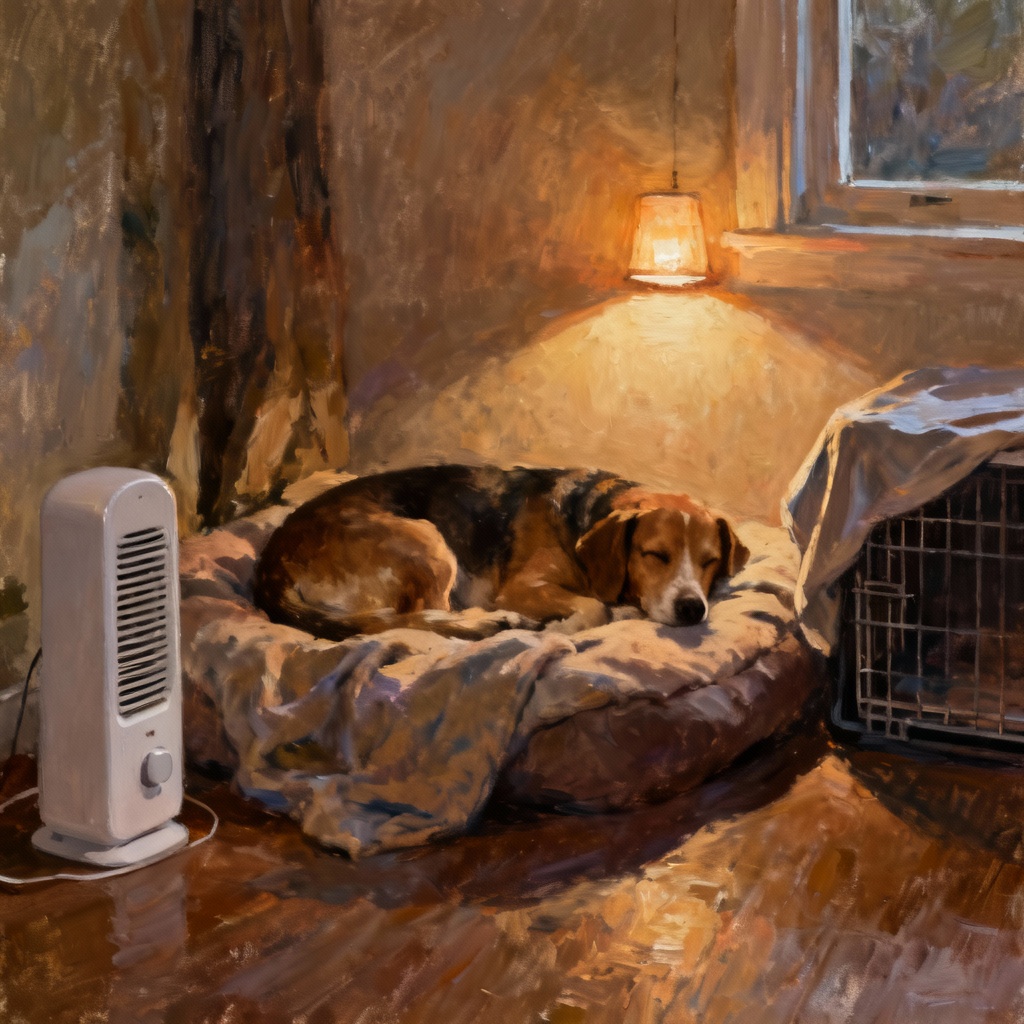
4. Create a Safe, Quiet Resting Area
Some dogs bark more when they feel exposed or overstimulated.
A peaceful retreat helps regulate their nervous system.
Options include:
- A crate with the door open
- A den-like corner with soft blankets
- A bed in a quiet room
- A covered crate for sound dampening
- A white noise machine nearby
- Soft, predictable lighting in the evening
Well-rested dogs bark significantly less.
5. Build a Reliable “Go to Spot” Cue
This is one of the most effective tools for alarm barking.
Steps:
- Choose a mat, bed, or defined area.
- Train your dog to go to that spot on cue.
- Reward with small treats for staying there.
- Slowly add distractions:
- Knocking
- Doorbell sounds
- Footsteps
- Outside noise
- Reward heavily when your dog remains in place quietly.
This gives your dog a job other than barking.
6. Practice Pattern Interrupts for Sudden Noises
A “pattern interrupt” breaks your dog’s instinctual reaction.
Examples:
- Gently toss a treat on the floor and say “Find it.”
- Call your dog over for a quick hand-target (touch cue).
- Guide your dog to sit or lie down.
- Ask for a known behavior like “Watch me.”
This redirects the dog from react → bark into react → look to human.
7. Sound Masking (a lifesaver for noise-reactive dogs)
If your dog reacts to every thump outside, masking helps tremendously.
Use:
- Fans
- Air purifiers
- Soft ambient music
- White noise machines
- TV or radio at low volume
- “Calming dog playlists” (YouTube has great options)
You’re not hiding the noise — you’re reducing the sharpness of sudden sounds.
8. Create Meaningful Predictability
Startle responses increase when a dog doesn’t know what’s coming next.
Adding predictable elements helps:
- Feeding at the same time daily
- Walks following a routine
- Familiar greeting rituals
- Predictable bedtimes
- Predictable nighttime environment (lights, blinds, TV)
Predictability reduces nervous-system reactivity.
Troubleshooting: When Alarm Barking Doesn’t Improve
Alarm barking can be slow to change, especially in sensitive or young dogs. Look for these root causes:
1. Your dog never gets enough calm time to decompress
If your home is high-activity, even the best training won’t land until the dog has downtime.
2. The dog lacks context for common sounds
Some “sound education” is needed — gradual exposure.
3. Anxiety is elevating reactivity
Alarm barking can be a symptom of underlying anxiety.
If your dog seems hypervigilant all day, you may be dealing with generalized stress.
4. There are too many unpredictable noises
Apartments, city living, and noisy neighborhoods make alarm barking more frequent.
5. The dog is reinforced without meaning to
If you rush to the window, yell, or react loudly, the dog thinks the noise was a threat.
When Alarm Barking Is Normal vs. When It’s Not
Normal
- A quick bark at a sudden noise
- Brief alerting when the doorbell rings
- A “huff” or “boof” when surprised
- Quick recovery after the noise
Concerning
- Barking escalates into panic
- Shaking, pacing, or hiding
- Barking continues long after the noise stops
- Multiple triggers per hour
- Hypervigilance (constantly scanning windows)
- Overreaction to tiny sounds (keys, footsteps, settling house noise)
In those cases, training + confidence building is essential.
Quick Summary: How to Reduce Alarm / Startle Barking
- Teach an “It’s okay” reassurance cue
- Do gradual sound desensitization
- Use visual blockers to reduce sudden sights
- Provide a predictable, calm routine
- Create a quiet, den-like rest area
- Redirect with pattern interrupts
- Mask sharp noises
- Build a strong “Go to spot” behavior
Consistency is key.
Most dogs improve significantly in 2–6 weeks.
TL;DR: Alarm / Startle Barking
Alarm barking is a reflexive reaction to sudden noises, movements, or unfamiliar sights. It isn’t territorial or emotional — it’s a quick “I wasn’t expecting that!” response. With gentle reassurance, predictable routines, and gradual noise desensitization, most dogs become far less reactive in just a few weeks.
- Triggered by sudden or unexpected sounds.
- Characterized by quick, sharp barks and alert posture.
- Reduced through calm reassurance and predictable cues.
- Noise desensitization gradually lowers the startle threshold.
- Visual blockers and quiet resting spaces help tremendously.
Most dogs improve with gentle practice and nervous-system regulation.
Want to explore the research behind these recommendations? Visit our Citations & Sources page →
Explore More Barking Guides
-
Territorial & Protective Barking →
Barking at visitors, noises, or movement near the home. -
Fear-Based & Anxiety Barking →
Barking caused by fear, uncertainty, or stress triggers. -
Attention-Seeking Barking →
Barking used to gain interaction or engagement. -
Boredom & Excess Energy Barking →
Barking from understimulation or unmet activity needs. -
Alarm & Startle Barking →
Reactivity to sudden noises, movements, or unexpected events.