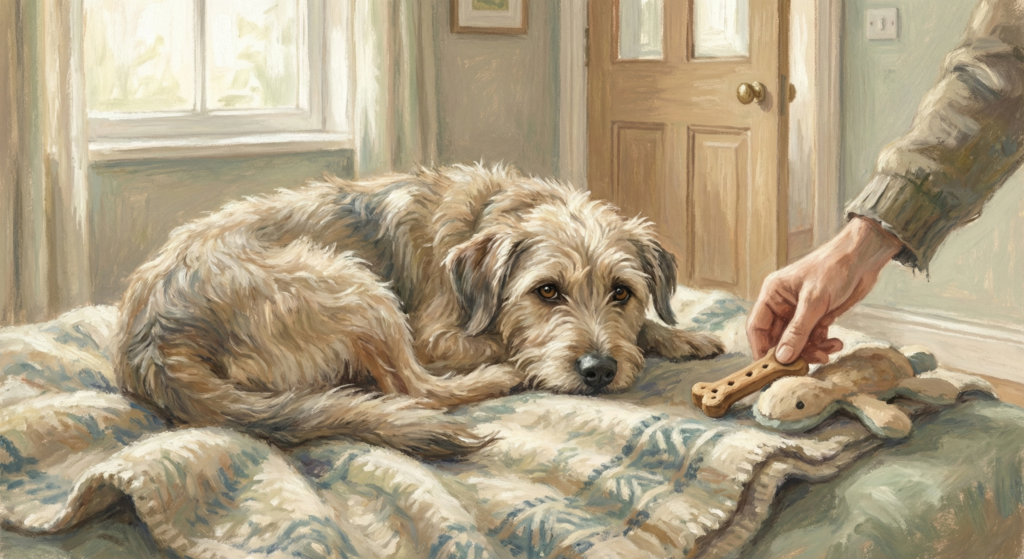

Why Dogs Bark When Left Alone — And How to Help Them Feel Safe Again
Separation anxiety barking is one of the most emotionally difficult behaviors for both dogs and their humans.
This type of barking comes from panic, not stubbornness — and dogs experiencing it truly cannot help themselves. Your dog isn’t “acting out.” They’re afraid of being alone and don’t know how to cope.
This guide explains what separation-related barking looks like, why it happens, and the most proven, humane steps to help your dog feel secure when you’re away.
What Separation Anxiety Barking Looks Like
Common signs include:
- Barking or howling immediately after you leave
- Intense, nonstop barking for long periods
- Pacing, panting, trembling, or drooling
- Destructive behavior near exits (doors, windows)
- Scratching at doors or trying to escape
- Following you from room to room before you leave
- Barking when you put on shoes, pick up keys, or prepare to go
- Excessive excitement or frantic greetings when you return
Many dogs bark out of panic, not boredom or misbehavior.
Why Dogs Bark From Separation Anxiety
1. Fear of Being Alone
Dogs are social animals. Some simply panic when their “person” disappears, especially if they’ve never been taught to feel safe alone.
2. Predicting Your Departure
Dogs learn patterns:
- keys
- jackets
- shoes
- locking doors
These cues can trigger anxiety before you even leave.
3. Past Negative Associations
Dogs who have been:
- rehomed
- adopted from shelters
- previously left alone for long periods
- separated from bonded humans
…may be more prone to separation distress.
4. Lack of Gradual Alone-Time Training
Many dogs never learn to stay home calmly — especially pandemic puppies who spent early life rarely alone.
5. True Panic Response
During separation anxiety, the body floods with stress hormones.
Barking is only one symptom of a full anxiety episode.
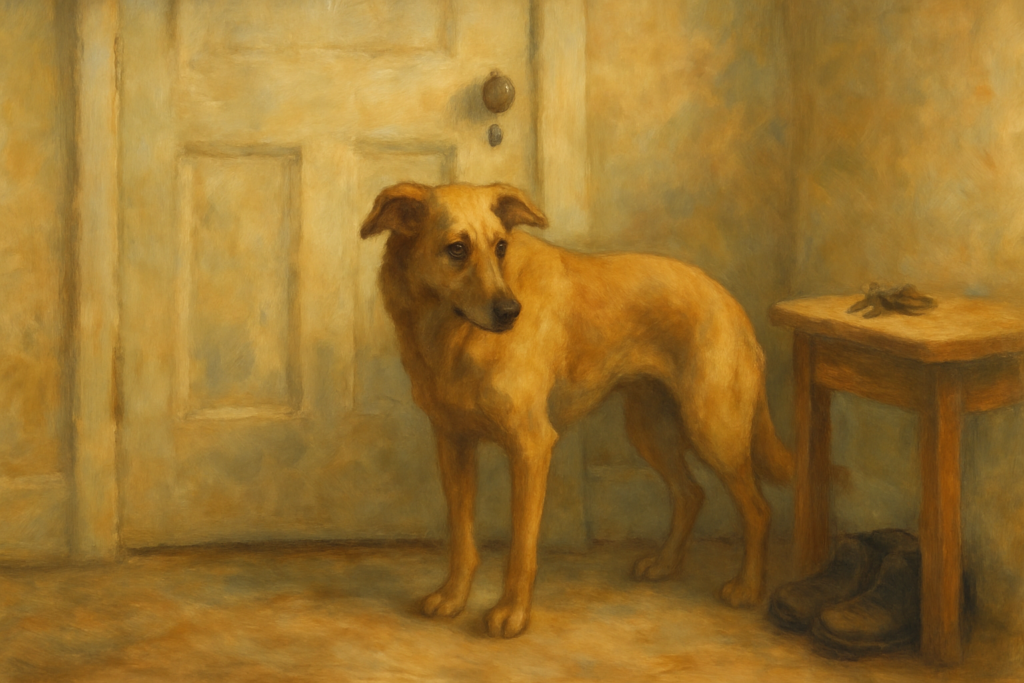
How to Reduce Separation Anxiety Barking
These steps work gently — no punishment, no “cry it out,” no harsh methods.
1. Change Your Departure Cues
Teach your dog that “getting ready to leave” doesn’t always mean you actually go.
Practice:
- picking up keys → sit back down
- putting on shoes → go to kitchen
- touching the doorknob → walk away
- opening the door → close it again and stay inside
Repeat until these cues lose their emotional charge.
2. Start With Extremely Short Absences
Dogs with separation anxiety need graduated departures.
Begin with:
- 1–3 seconds
- then 5 seconds
- then 10
- then 20
- then 1 minute
Only increase when your dog stays calm.
This rewires the emotional response from panic → “nothing bad happens when you leave.”
3. Create a Safe, Predictable Routine
Dogs feel calmer when they know what to expect.
Daily structure helps:
- morning walk
- predictable feeding times
- mental enrichment
- calm downtime
- consistent alone-time practice sessions
A regulated dog is a calmer dog.
4. Use Enrichment During Short Absences
This does not fix separation anxiety alone, but it can help support early training.
Use:
- stuffed Kongs
- lick mats
- long-lasting chews
- food puzzle toys
- snuffle mats
For mild cases, these may help.
For true separation anxiety, they only work as part of a larger plan.
5. Avoid Punishment or “Letting Them Cry It Out”
This often makes the fear worse.
Never:
- yell
- use bark collars
- punish destruction
- force long separations
Your dog isn’t being dramatic — they’re terrified.
Humane methods work faster and better than aversive ones.
6. Practice Calm, Low-Key Departures and Arrivals
Keep energy slow and neutral:
- no big fanfare when you leave
- no excited greeting when you return
You want your comings and goings to feel “boring” and predictable.
7. Know When to Call a Professional
Consider a trainer or veterinary behaviorist if your dog:
- cannot be left alone at all without panicking
- injures themselves or damages doors/windows
- barks or howls for long periods
- refuses food during training
- shows extreme distress (drooling, trembling, escape attempts)
A customized plan is often needed for moderate to severe cases.
FAQ: Separation Anxiety Barking
How do I know if it’s separation anxiety and not boredom?
Separation anxiety begins as soon as you leave and is paired with panic-like symptoms. Boredom barking tends to happen later, out of restlessness.
Will my dog grow out of separation anxiety?
Most won’t “grow out of it,” but many improve dramatically with structured training.
Can I use a crate for separation anxiety?
Sometimes — but only if your dog is completely crate-comfortable. For some anxious dogs, crates increase panic.
How long does training take?
Often a few weeks for mild cases; several months for moderate to severe. Progress is real, but gradual.
Should I get another dog to fix it?
Usually no. A second dog doesn’t replace the human bond the anxious dog relies on.
TL;DR: Separation Anxiety Barking
Separation anxiety barking comes from panic, not misbehavior. Dogs who struggle with being left alone react out of fear, stress, and uncertainty. With gradual training, predictable routines, and gentle departures, most dogs can learn to stay calm when home alone.
- Starts immediately after you leave — often intense or nonstop.
- Triggered by departure cues: keys, shoes, jackets, doors.
- Requires gentle, structured alone-time training (no punishment).
- Short absences → longer ones only when the dog stays calm.
- Professional help recommended for severe panic or self-harm signs.
Most dogs improve significantly with slow exposure and predictable routines.
Want to explore the science behind these recommendations? Visit our Citations & Sources page →
Explore More Barking Guides
-
Territorial & Protective Barking →
Barking at people, noises, or animals near home. -
Fear-Based & Anxiety Barking →
Barking caused by fear, uncertainty, or stress triggers. -
Attention-Seeking Barking →
Barking to get interaction or engage with humans. -
Boredom & Excess Energy Barking →
Barking from understimulation or lack of activity. -
Alarm & Startle Barking →
Quick, sudden barking at unexpected sounds or movement.